
March 22, 2026 • 3 min read
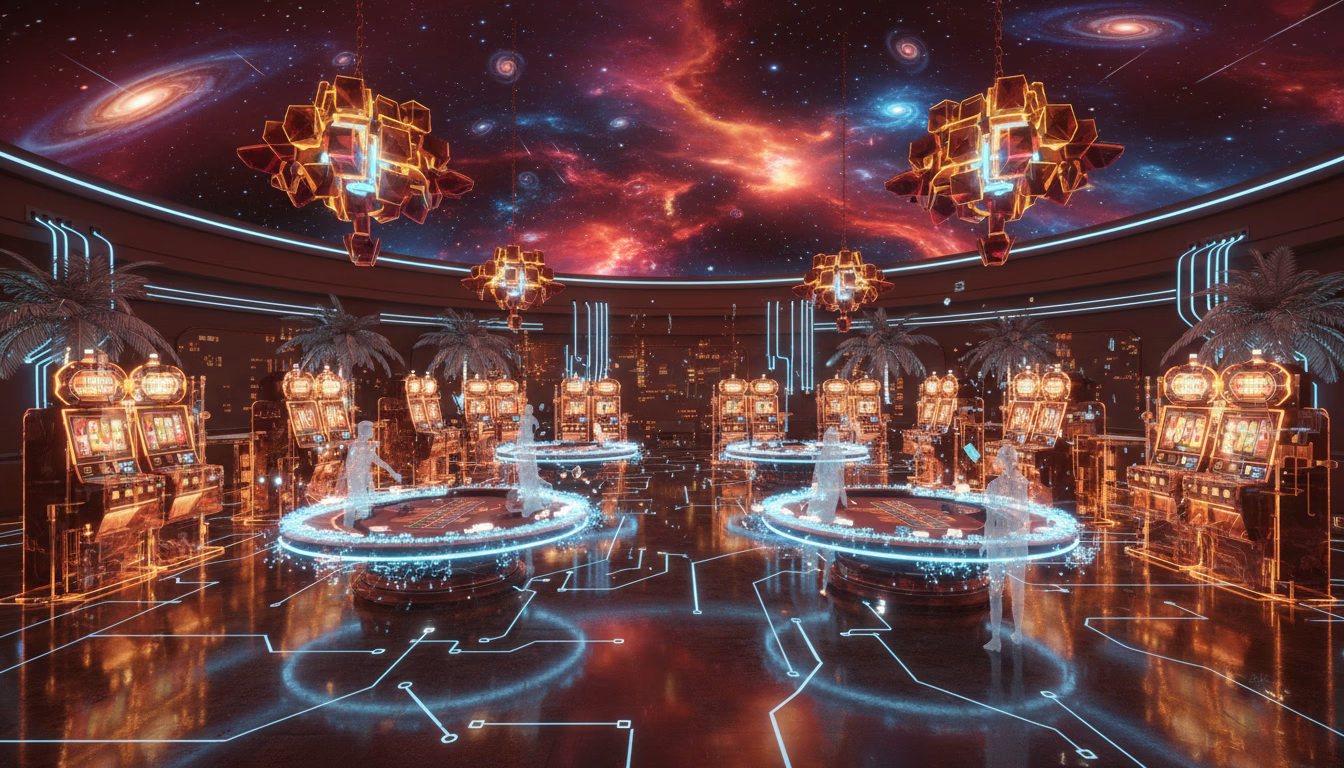
Virtual-reality gambling has been arriving next year for about a decade. What actually exists is narrower than the press releases and more interesting than the hype, and it is worth separating the two.
What has actually shipped
VR casino software is real: an operator launched a headset casino as early as the mid-2010s, and it is still the most cited example precisely because so few followed it. Since then the major live-casino suppliers have put their engineering elsewhere, and the formats that grew instead are the ones that run on an ordinary phone — streamed game shows, hybrid wheels with software multipliers layered over a physical spin, and first-person software versions of live tables with a button that drops the player into the streamed room.
That is the honest shape of the market. Immersion as a product did not fail; it simply lost to a format that needs no hardware and loads in four seconds.
What stayed a demonstration
Several things that casino writing describes in the present tense have never shipped as products. Haptic chips you can feel. A dealer who greets a returning player by name. A shared room where friends sit at one table across continents and read each other's gestures. These exist as conference demonstrations and concept videos, and the gap between a demonstration and a licensed product running in twenty jurisdictions is where most of them have stayed.
The friction is practical. A headset session is physically tiring in a way a phone session is not, the hardware is a purchase rather than an app, and gambling sessions are short, repetitive and often incidental — close to the opposite of what immersive hardware is good at. For the technology itself, independent of gambling, the Wikipedia overview of virtual reality is the plain reference.
| Claim you will read | Status | What exists instead |
|---|---|---|
| VR casinos are mainstream | No | A handful of apps; the growth went to mobile game shows |
| Haptic feedback on chips and cards | Demonstration | Standard controller vibration, if anything |
| AI dealers that greet you by name | Not shipped in live casino | Automated roulette with no dealer at all |
| Shared rooms with friends worldwide | Limited | Chat alongside a streamed table |
| Better odds in VR | False | The same certified generator and the same RTP |
Does immersion change the odds?
No, and the reason is structural. The return to player is set by the studio before release and printed in the game's information panel; a headset changes the camera, not the maths. A VR blackjack table runs on the same certified generator as the browser version of the same game.
What immersion plausibly does change is on the cost side: how long a session lasts and how quickly rounds are played. That is the same lever described in the psychology of casino game design — presentation shaping behaviour rather than probability — and it is worth more attention than the graphics.
Frequently Asked Questions
Can you play real-money casino games in VR today?
In a small number of apps, yes. It is a niche rather than a category, and the large live-casino suppliers do not currently ship a VR product.
Will VR replace live dealer tables?
There is no sign of it. The formats that have grown are game shows and hybrid wheels, which work on a phone without extra hardware. Descriptions of walking around a virtual table describe a concept, not something you can open today.
Are VR casino games fairer or more generous?
Neither. The same rules apply: check the return to player and the volatility in the game's own panel, and check the licence covering the site — exactly as set out in the piece on advice that survives the arithmetic.
The short version: the interesting part of the last decade was not the headset but the studio, and the promised future keeps being described in the present tense by people who have not opened it. Judging that kind of claim is a skill of its own — the same one that astrology and slots calls for, and the same one worth applying to sustainability claims.